
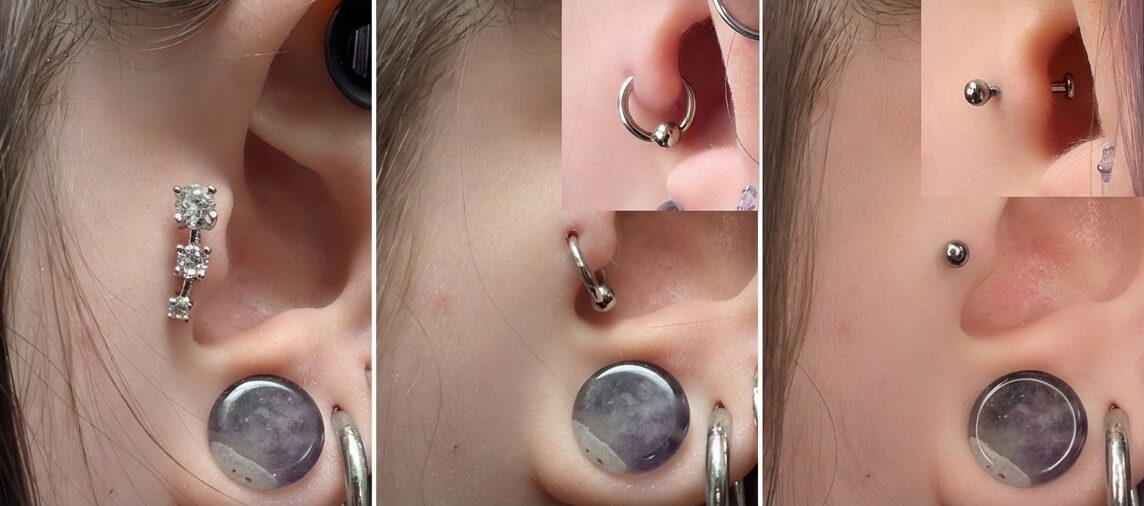
We’ve all seen the “Pinterest-perfect” photos: tiny dainty studs, snug hoops in a conch, and dangles that look stunning. But as a piercer, I am constantly seeing the aftermath when these “pretty” setups are put into brand-new holes. The truth is, choosing safe initial piercing jewelry is the only way to ensure your new piercing actually survives the first year. You have to earn the dainty and statement looks through patient healing.
- 📏 The Secret to Safe Initial Piercing Jewelry
- 💎 Why Large Decorative Jewelry Causes Piercing Problems
- ⁉️ Why Safe Initial Piercing Jewelry Matters for Your Health
- 👃 Why Rings are "Level 2" Jewelry
- 📸 Aesthetics vs. Anatomy: What Looks Cute Might Not Be A Friend
- 🛠️ When Can I Actually Downsize? Piercing Healing Timelines
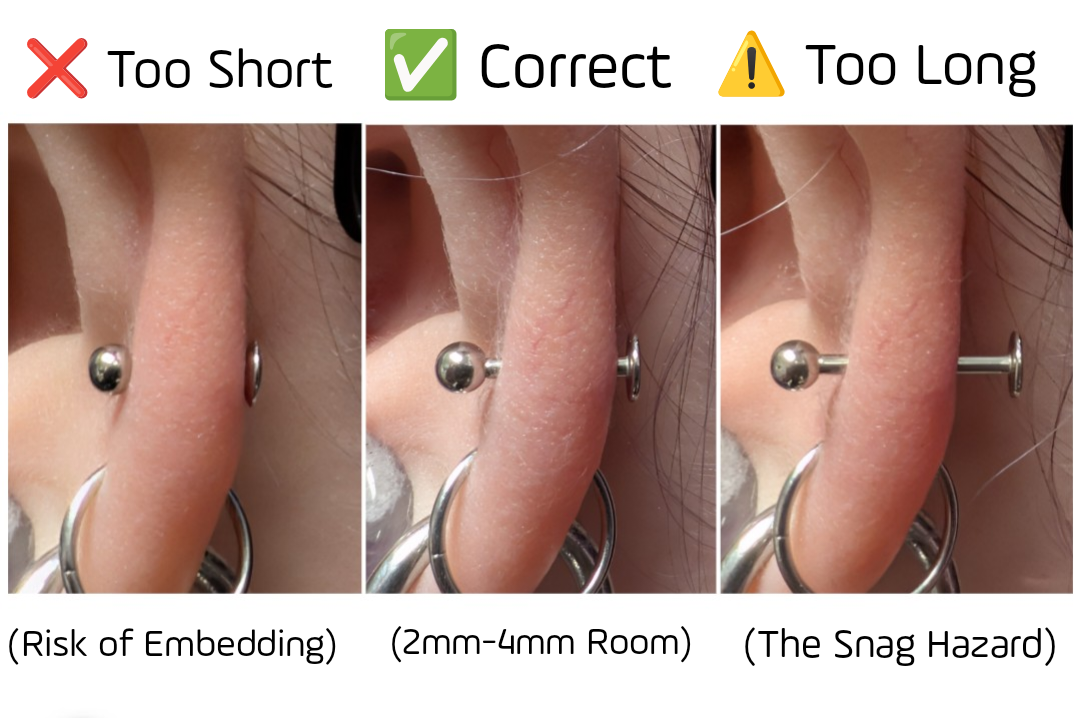
❌ Too Short: Zero room for swelling. If your ear expands, it will “swallow” the jewelry (embedding). This is will be very painful and you will want it removed, not cute.
✅ Just Right: This is the 2–4 mm safety window. It leaves space for your body to heal, breath, and for you to clean.
⚠️ Too Long: While safer than a short bar, an 11mm bar in a 6mm lobe is a “snag hazard.” It catches on hair, masks, and clothing causing constant irritation.
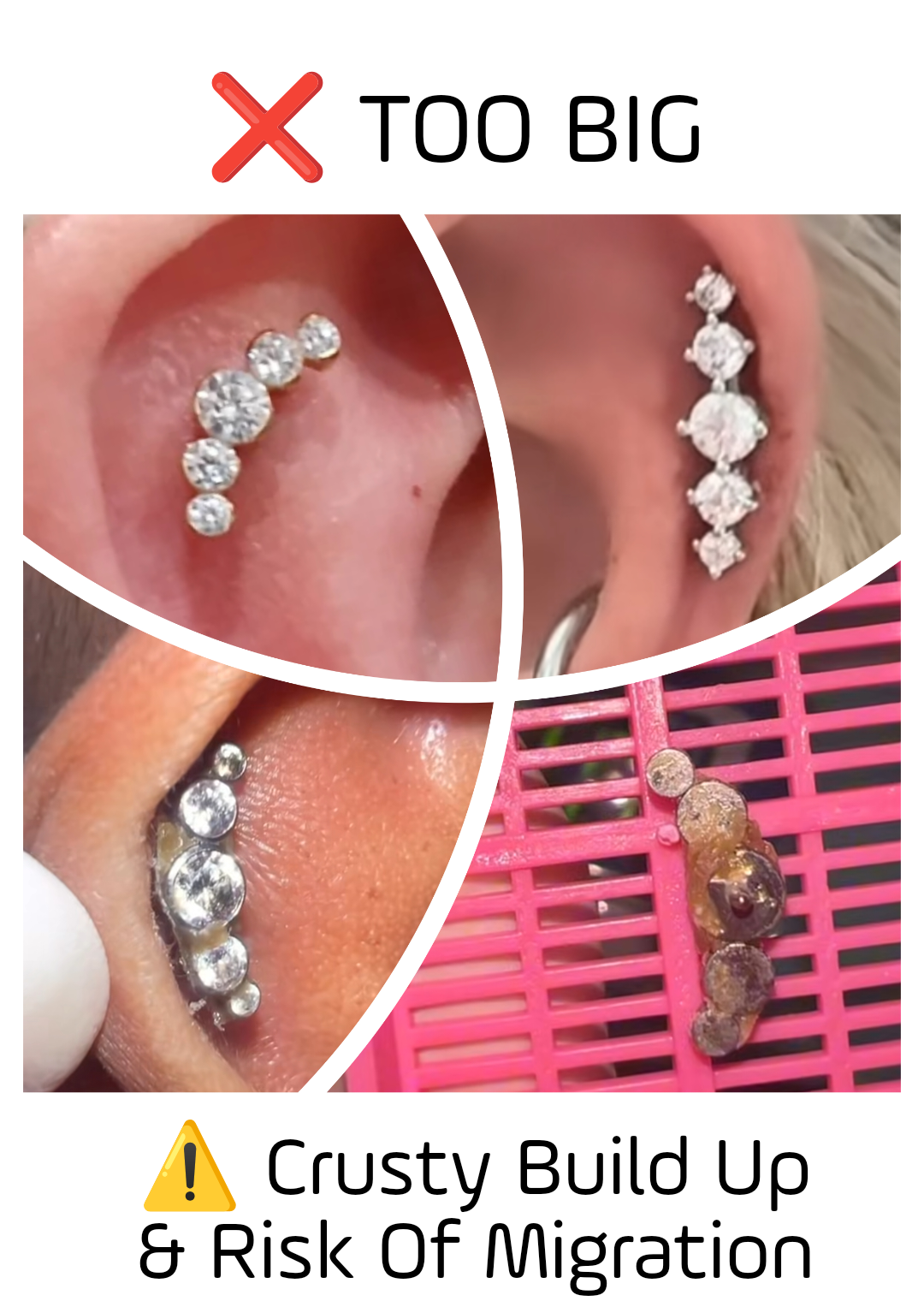
The Problem: We love a big, sparkly gem cluster, but for a fresh piercing, oh no . . . they are heavy and harder to clean.
The Risk: Massive tops trap “crusties” , hair, and bacteria underneath where you can’t clean them. The weight also pulls on the fresh wound, leading to migration or permanent irritation bumps.
The Rule: Start small, 2mm – 4mm tops. Save the massive statement pieces for when the piercing is stable and toughened up.
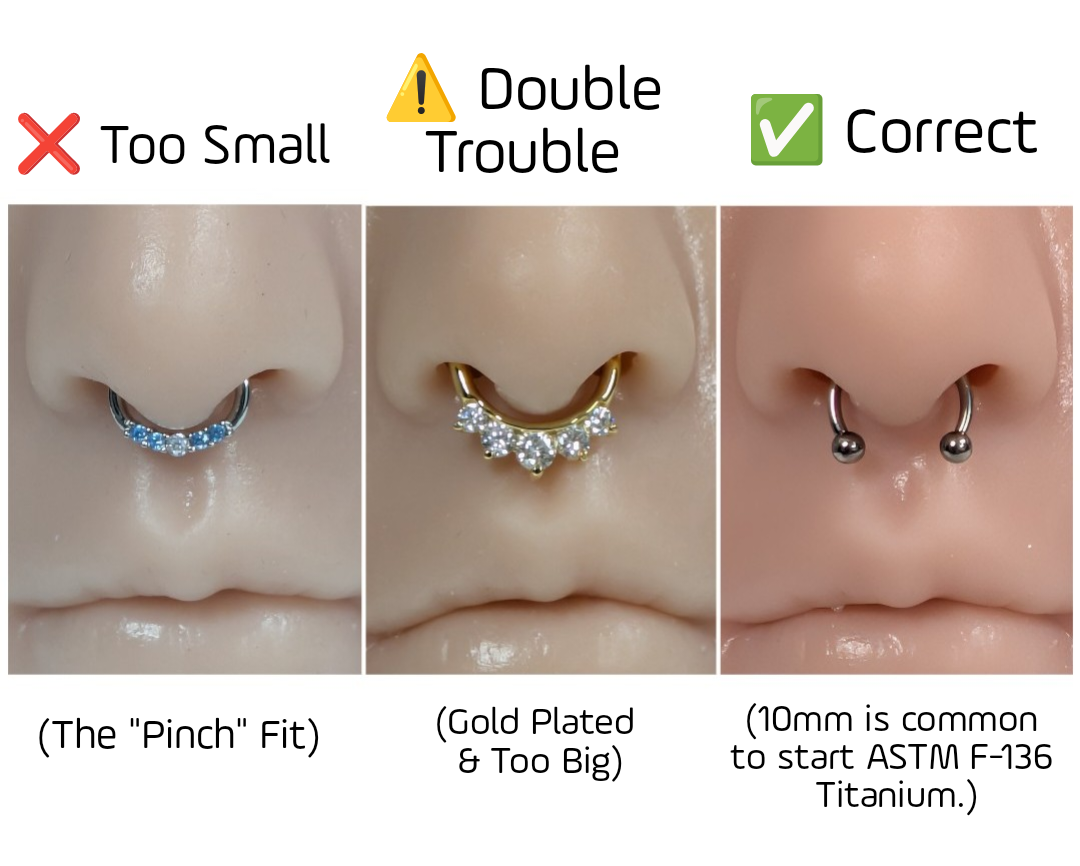
❌ Too Small: A tight ring that hugs the septum or any piercing. This creates pressure that can actually cut through your tissue over time called the “cheese wire effect” shown in my last blog “How to Fix a Piercing Bump: Science vs. Dangerous Myths“
⚠️ Gold-Plated & Huge: Plating will flake off inside your piercing, causing a nasty reaction. Plus, a huge diameter swings like a pendulum, constantly raking the wound.
✅ The Professional Choice: Implant-Grade Titanium. It’s light weight, hypoallergenic and should be sized specifically for your anatomy.
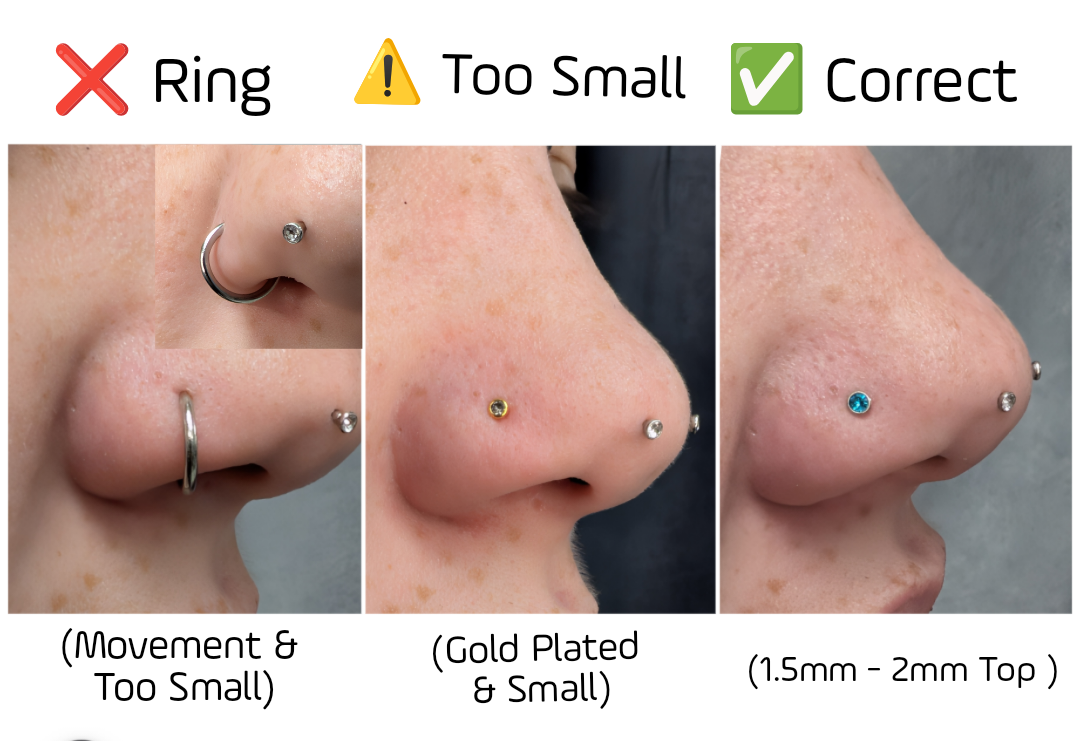
The Danger: Hoops rotate. Every time they spin, they drag bacteria and crust into the piercing. Destroying the fistula that that just started to grow, now prolonging your heal.
The Expert Advice: Some jewelry types—especially tight hoops—should not be worn until you are 100% healed. For a nostril, helix, conch that means months of patience with a stable straight bar first.
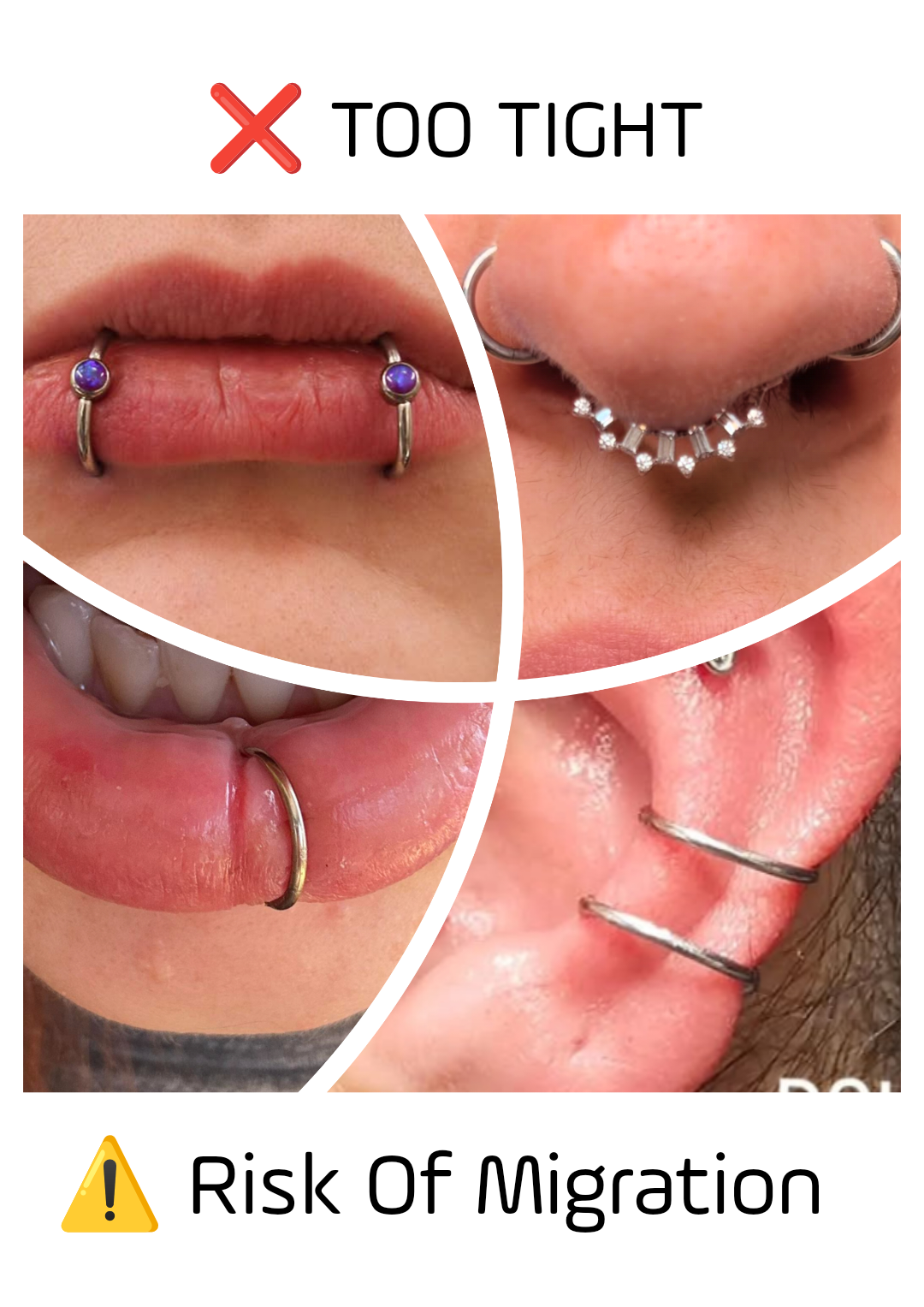
I see these fresh piercings online all the time from other shops. They look pretty and “cute” and “perfect” for a 30-second photo op.
The Reality: These setups have zero swell room. By Day 3, these clients are often in pain, worse than Day 1, and heading to a shop to have the jewelry swapped.
The Lesson: Just because an influencer (or even another shop) posts it doesn’t mean it’s anatomically safe for healing.
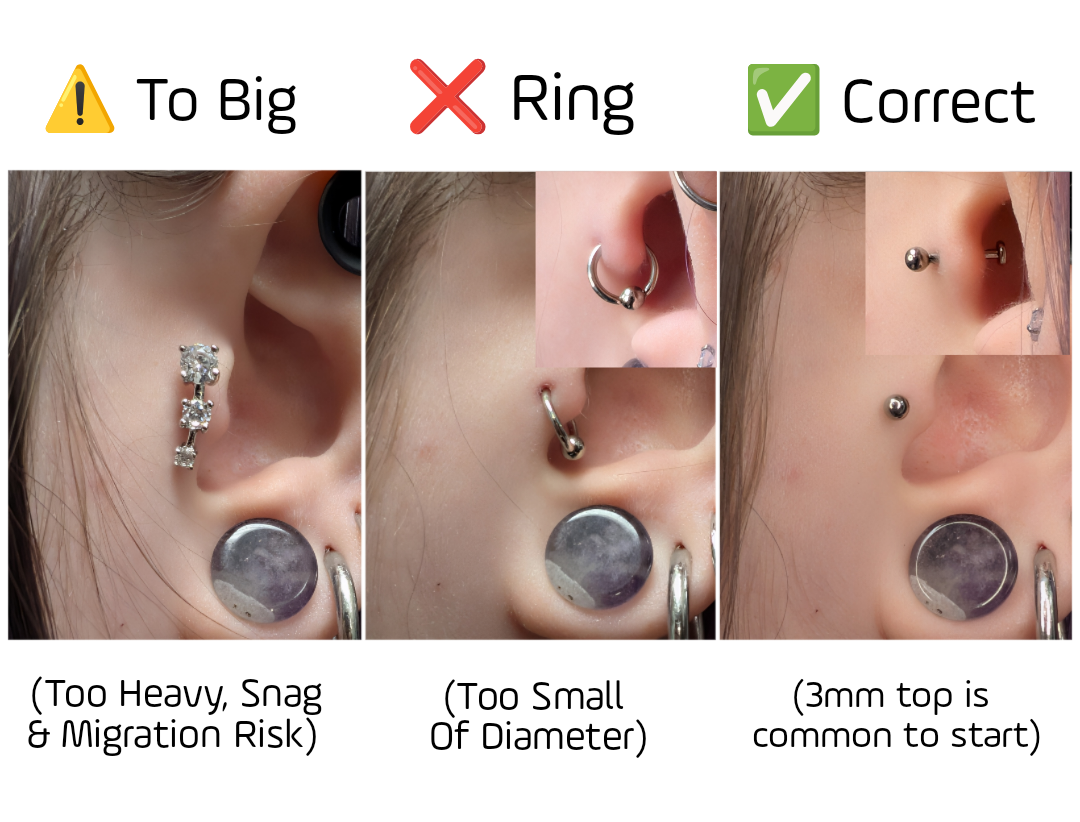
Every body is different, and every piercing has its own clock.
The Downsize: This isn’t a “one size fits all” 4-6 week rule. Some piercings need a downsize at 4 weeks; some need longer. We change the bar length when your body is ready to keep it stable while it continues to heal.
The “Goal” Look: That perfectly fitted hoop in the photo? Or that big gem cluster ? That is a reward for a fully healed piercing, in most cases 9+ months. 💕
Ready for a new piercing in London, Ontario ? Visit me at Neon Tattoos and Piercings for a professional consultation and an expert fit.