
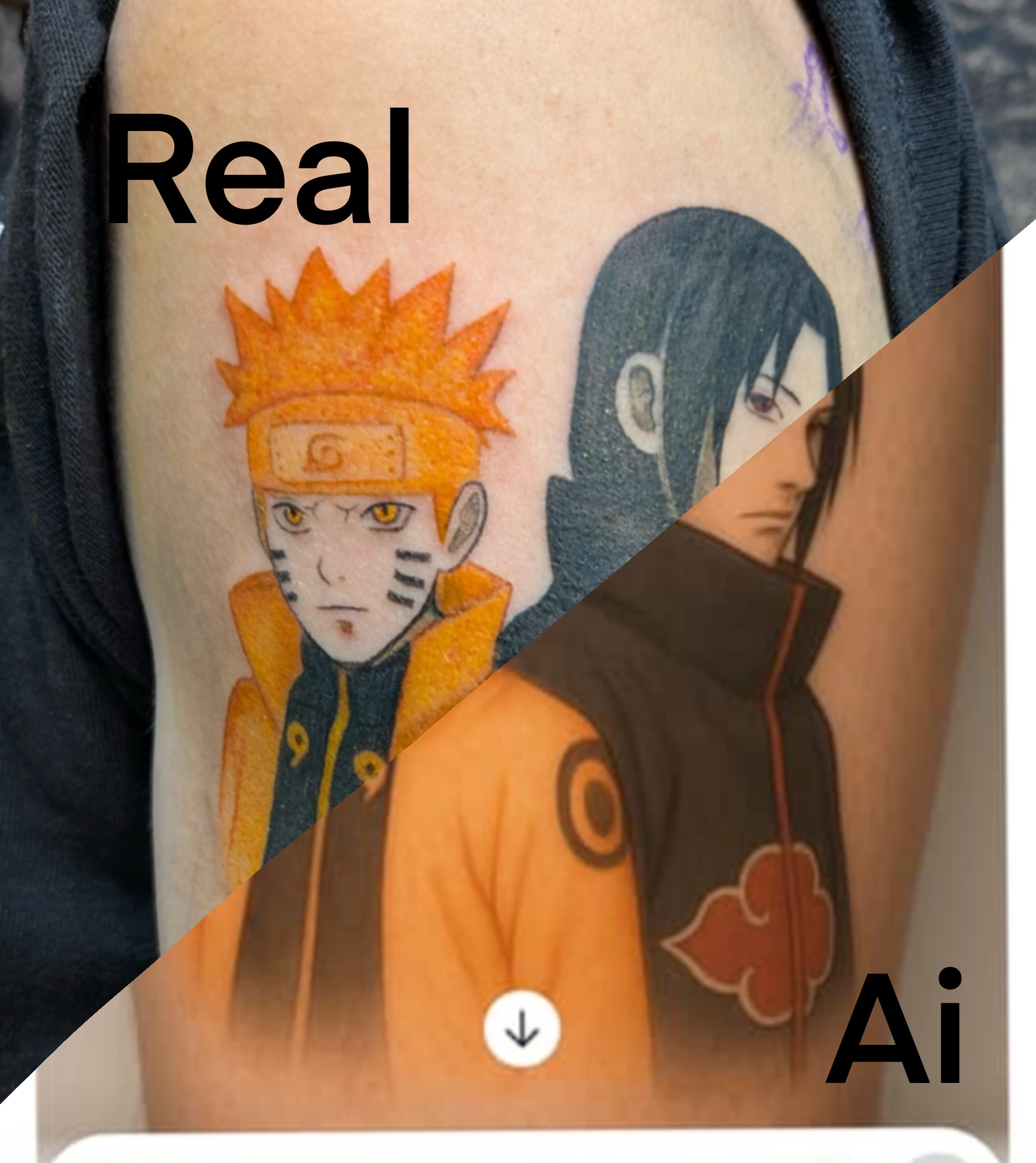
With AI getting better every year, it’s becoming harder to tell the difference between AI tattoos vs real tattoos online. Many tattoo photos on Instagram look flawless — whether because they were edited, shot in studio lighting, or entirely generated by AI. This guide breaks down how to spot the difference and how to fact-check portfolios so you know exactly what you’re getting before booking your next tattoo.
If you’re looking for a professional tattoo artist or guidance on how tattoos really heal and appear over time, this guide will help you distinguish real tattoos from AI or edited images.
AI Tattoo: Incredible, But Not Real
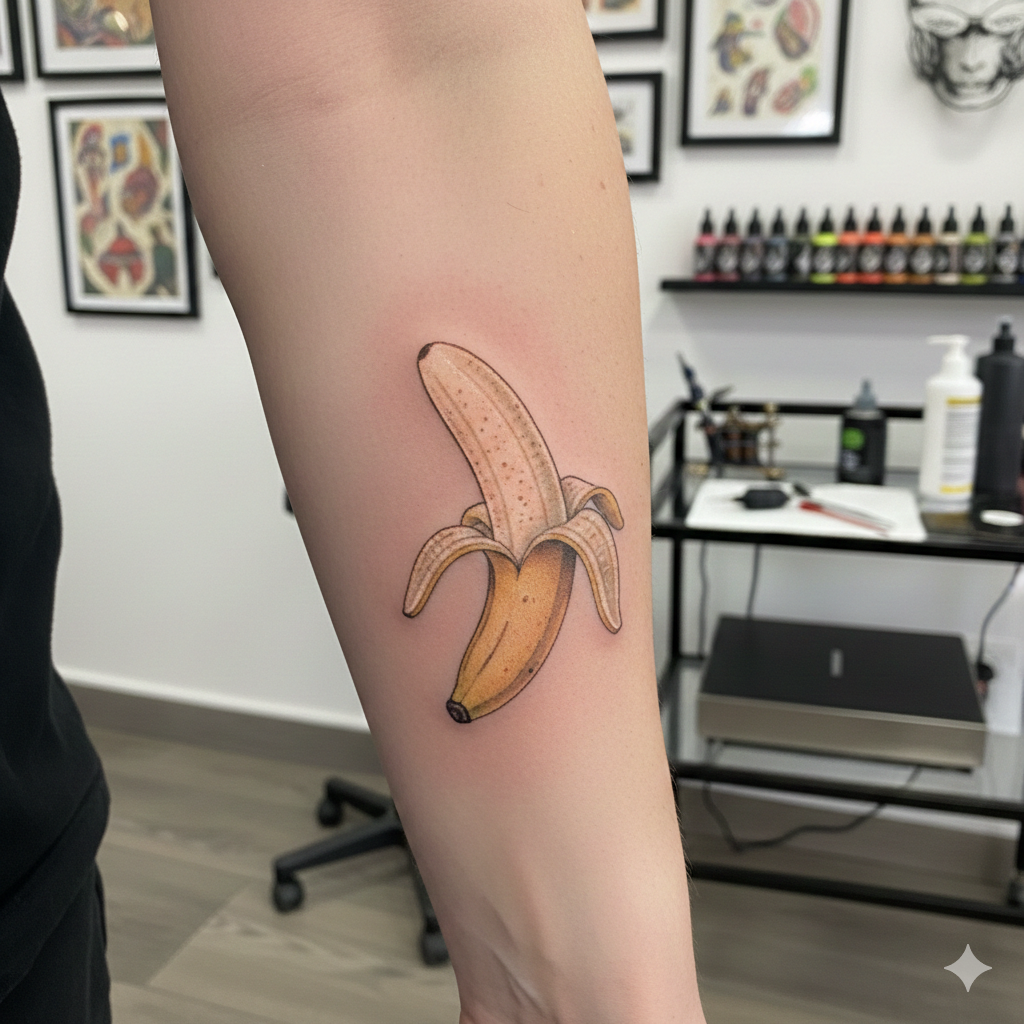
AI images in 2025 are more sophisticated than ever. They can replicate:
- Flawless skin
- Many if not all styles of tattoos
- Lighting, shadows, and subtle highlights
- Softened, “healed” appearances
- Full backgrounds of studios and supplies
The biggest challenge with AI tattoos vs real tattoos is that AI can create designs that look perfect on screen but don’t translate well to actual human skin. They don’t account for how ink settles in living tissue, how skin stretches, or how the tattoo heals over time. Even if an AI tattoo looks “healed,” real tattoos change subtly during the first weeks and months as the skin forms a protective layer around the ink. This is why real-life tattoos, even when photographed professionally, may differ slightly from digital representations.
Instagram and Photo Techniques: Real Tattoos, Slightly Enhanced
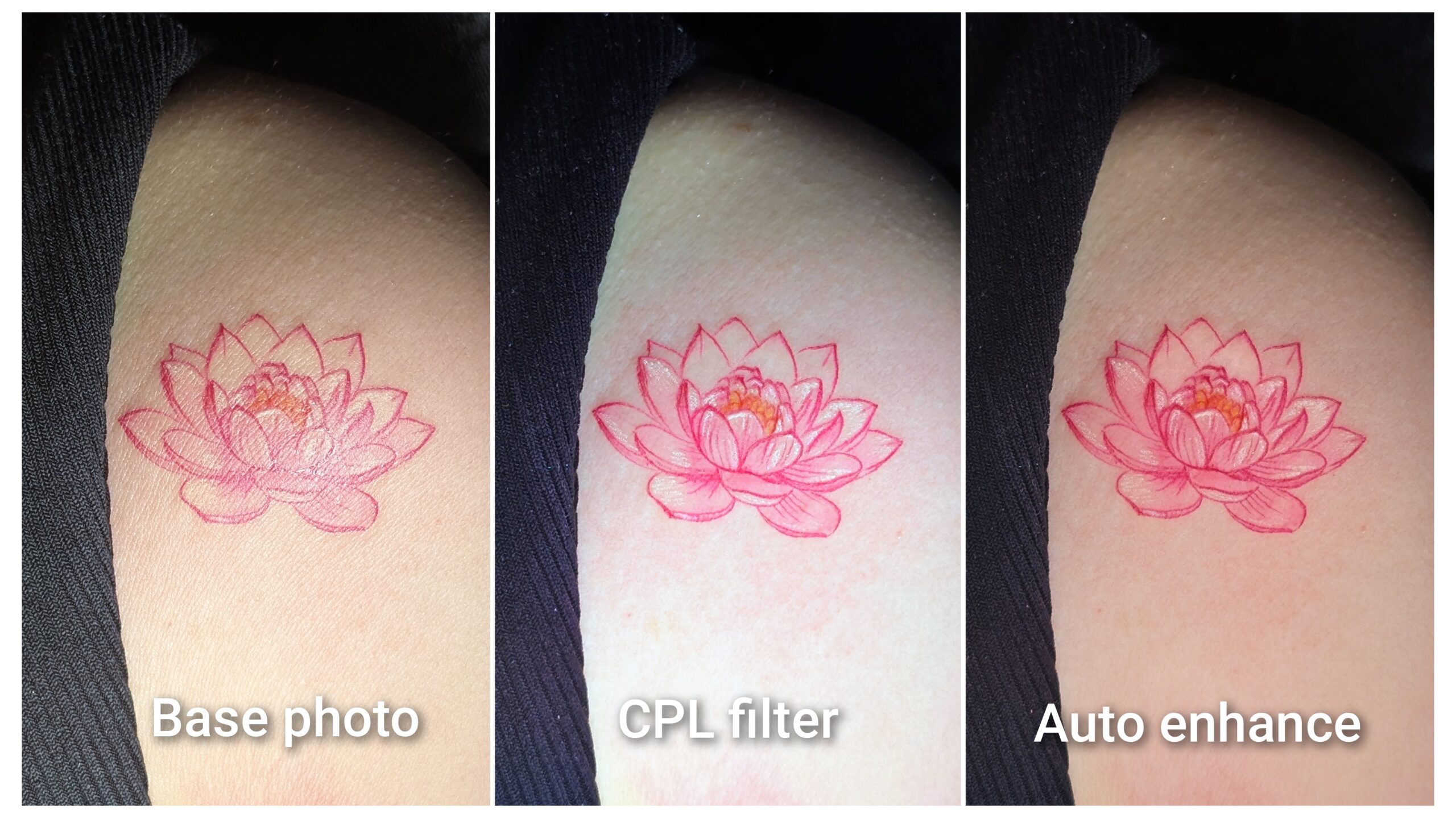
Not every “too-perfect” tattoo you see online is AI. Many are genuine tattoos, photographed professionally by artists to show their work at its best:
- Lighting: Studio lighting highlights color vibrancy and softens shadows
- CPL Filter: Reduces glare and makes tattoo colors look clearer in photos.
- Angles and composition: Certain angles showcase line work or shading more clearly
- Phone Filters or minor adjustments: Small tweaks enhance contrast, saturation, or sharpness
- Consistency across posts: Makes portfolios look polished, but may exaggerate how the tattoo looks in normal light
These techniques don’t mean the tattoo is fake , they simply present it at its most photogenic. In reality, colors may appear slightly different, skin texture is visible, and subtle imperfections prove the tattoo is authentic. This is why checking healed tattoo photos in your artist’s portfolio is crucial when booking a tattoo.
Turning AI Tattoo Designs Into Real Tattoos: What Artists Actually Change
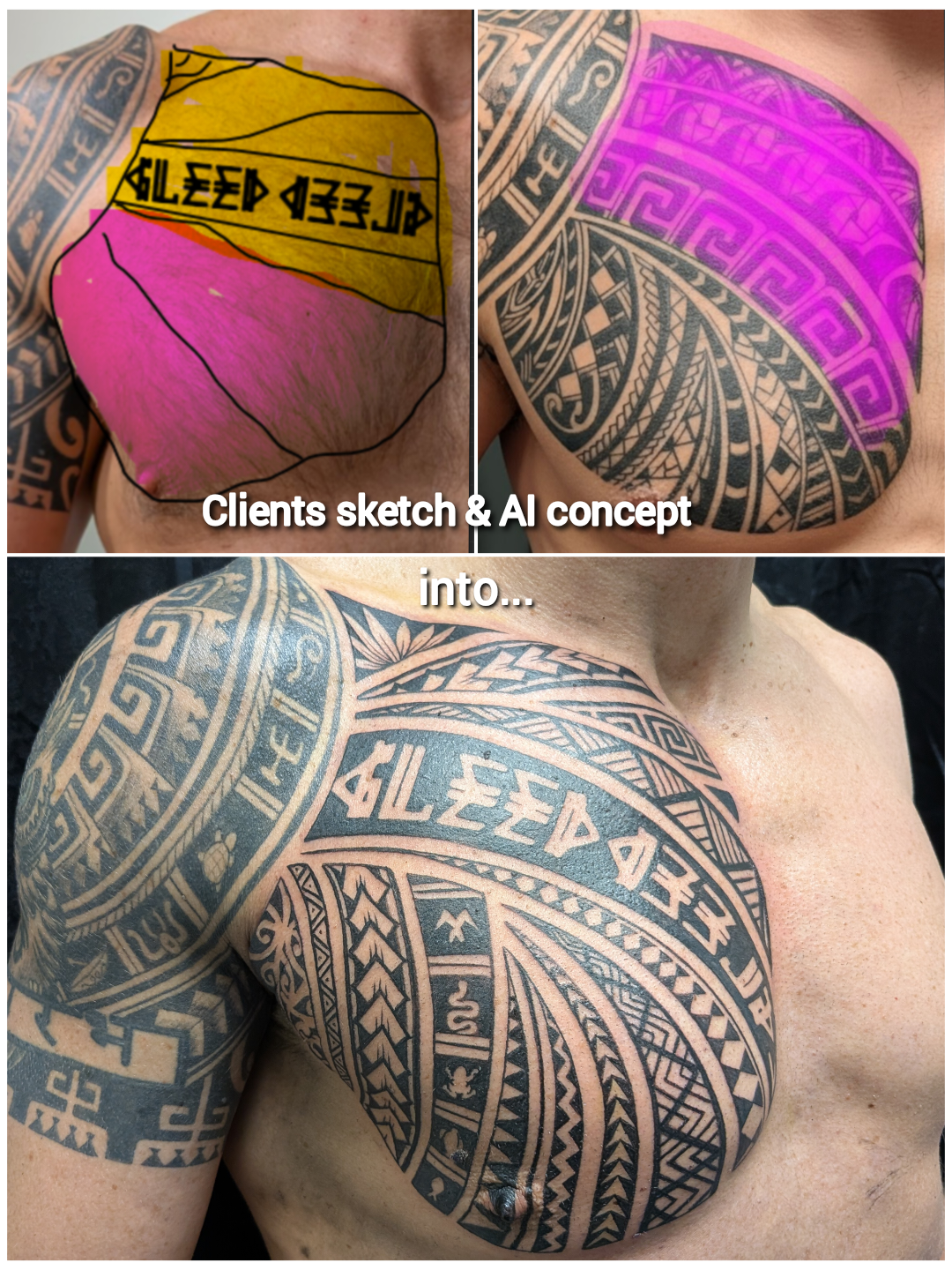
Many clients now bring AI-generated tattoos they love to a professional tattoo artist. Here’s what to expect:
- Concept, not copy: Artists use AI images as inspiration, not final stencils. Your body’s anatomy, placement, and healing must be considered.
- Adjusting for body shape: AI often ignores curves, muscles, or bones. Artists modify designs to wrap naturally with your body.
- Ink, line, and shading adaptations: Tiny details or low contrast images may not translate well to real skin, so artists adjust line thickness, spacing, and shading for clarity.
- Longevity and healing: Professional artists ensure the tattoo will age well. Colors, fine details, and placement are tailored to your unique skin and placement.
A skilled tattoo artist will communicate these adjustments clearly, keeping the essence of your design while making it practical, durable, and personalized.
How to tell Real Tattoos From AI
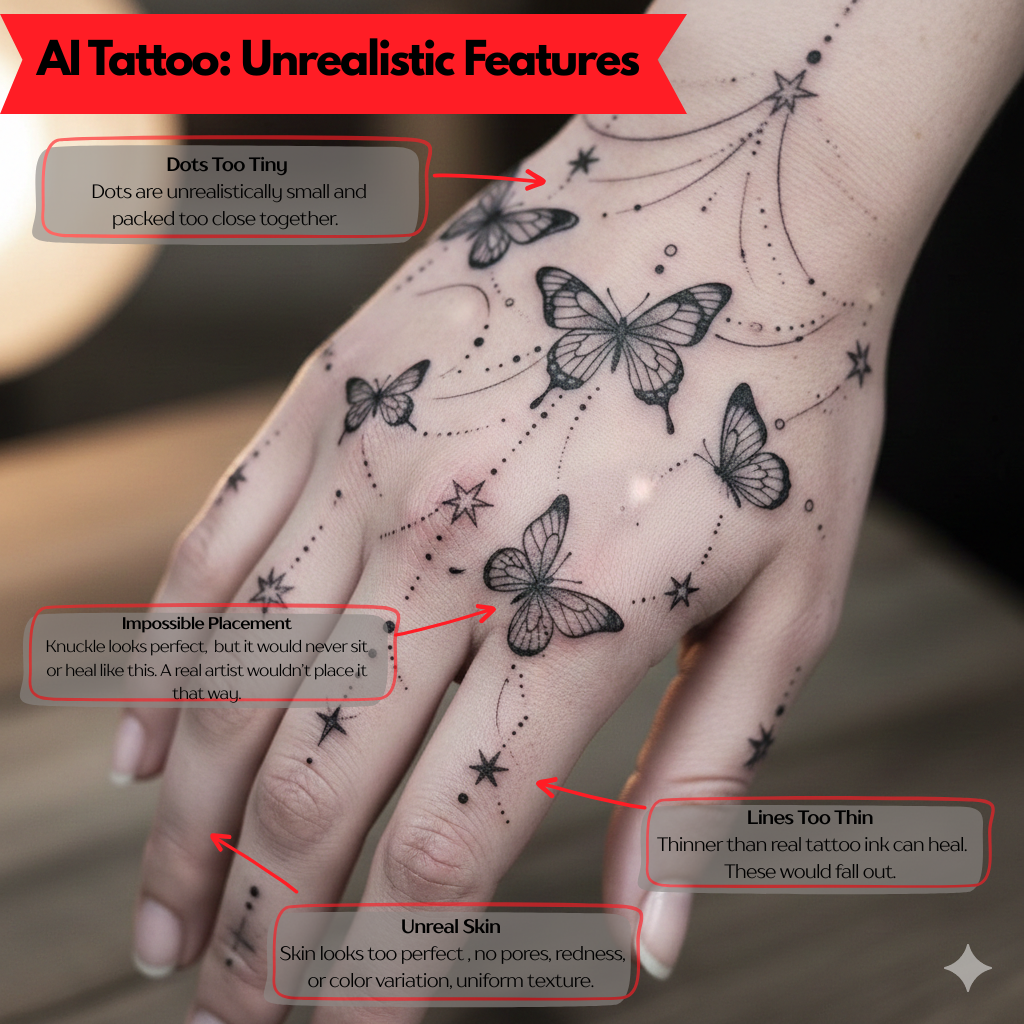
1. Skin Texture
- AI: Smooth, uniform, sometimes over-glossed to simulate freshness
- Real Tattoos: Micro-pores, subtle imperfections, redness and swelling if fresh, natural shine or matte in healed
2. Placement and Anatomy
- AI : Can fake skin and body parts, but it still doesn’t understand your body’s movement or how a design will distort in real life.
- Real Tattoos: Artists tailor every design to your unique anatomy so it fits, flows, and ages properly on actual skin.
3. Healing and Aging
- AI: Can simulate healed tattoos, but the healing is idealized
- Real Tattoos: Ink settles over weeks, lines soften, white ink fades slightly, and skin texture becomes visible. Healing times vary based on placement, skin type, and lifestyle.
4. Line Work
- AI: Mathematically perfect with extreme contrast against the skin or it can be sloppy and abstract.
- Real Tattoos: Slightly softer lines, natural blending, and variations based on technique and skin.
When comparing AI tattoos vs real tattoos, always remember that real skin has pores, texture, heat, swelling, and movement — things even the best AI can still misunderstand.
Fact-Checking Your Artist
Even with impressive photos, it’s important to confirm that the work is real:
- Ask for healed photos from multiple angles
- Look for progress shots showing stencil and fresh ink
- Seek a variety of placements, skin tones, and tattoo sizes in the portfolio
- Clarify if some images are AI or concept art
Professional tattoo artists are transparent about what is real, concept, or AI-assisted. This ensures you have realistic expectations and a tattoo you’ll love for years.
Why This Matters
AI and social media are incredible tools for inspiration, but tattoos are living art. They interact with your skin, heal over time, and subtly change as your body moves. Knowing the difference between AI designs, polished Instagram photos, and real-life tattoos helps you:
- Choose a trustworthy professional tattoo artist
- Set realistic expectations for your tattoo
- Avoid disappointment as your tattoo heals
- Ensure longevity and quality of your piece
Use AI for concept ideas, enjoy social media for inspiration, but rely on real portfolios and healed tattoos when booking. That’s how you get a tattoo that’s beautiful, realistic, and truly yours.